
The Top 4 ERP Features That Help Scale Your Business


Secondary produce wholesalers operate in one of the most demanding segments of the fresh produce supply chain. Every day involves managing hundreds of fast-moving SKUs, tight margins and rapid product turnover, placing constant pressure on buyers and warehouse teams to rotate stock accurately, minimise waste and fulfil orders on time. Many wholesalers also deliver value-added services such as repacking, processing and mixed orders, adding further complexity to already fast-paced operations.
This pressure is compounded by the margin sensitivity of the sector. While secondary wholesalers have greater flexibility over pricing structures than primary wholesalers, they also carry significantly higher operational complexity. Margin protection is not driven by buying price alone, but by how effectively wastage, labour, freight, repacking and fulfilment costs are controlled across fast-moving inventory. In this environment, system accuracy and operational visibility are critical. Generic ERP platforms fall short because they are not designed to manage the inventory precision, traceability, logistics coordination and processing workflows required in high-volume, perishable distribution.
This blog highlights the ERP features secondary wholesalers need to operate efficiently and scale with confidence. It outlines how a purpose-built fresh produce ERP can reduce friction across inventory, quality, logistics and finance, helping wholesalers protect margins while supporting reliable, sustainable growth.
Why Industry-Specific ERP for Fresh Produce Matters
Fresh produce wholesalers operate under conditions that general wholesale or warehouse systems are not built to handle. Short shelf lives, rapid stock movement, strict quality requirements and complex buying patterns place constant pressure on systems and teams.
For businesses operating alongside or purchasing from market agents, there is also a need to align with industry compliance requirements, levy handling and transparent supplier reporting. Fresh produce ERP links inventory, quality control, supplier management and logistics into a single operational platform, reducing manual work and operational risk as the business scales.

Feature 1: Compliance and Financial Management That Supports Growth
Secondary wholesalers rely on precise purchasing, pricing and cost control to maintain profitability across fast-moving inventory, making financial accuracy critical.
An industry-specific ERP supports secondary wholesalers by managing supplier purchase pricing, landed costs, rebates and margin rules within a single system. Stock can be purchased, received and costed accurately at receival, ensuring pricing reflects real costs as products move through the business.
Flexible pricing structures allow wholesalers to manage contract customers, ad hoc buyers and volume-based pricing without manual overrides. The system also supports accurate invoicing, customer account terms and credit controls, helping businesses manage cash flow while maintaining consistency across sales channels.
By integrating purchasing, inventory and finance, a fresh produce ERP gives secondary wholesalers clear visibility into margins, costs and profitability, reducing errors and supporting confident decision-making as volumes grow.
Feature 2: Inventory, Quality Control and Traceability Built for Perishables
Scaling a fresh produce operation requires precise control over inventory, quality and yield. A produce-specific ERP records stock as it is purchased, received or packed, with full traceability maintained from inbound receival through to final sale.
Quality assurance workflows are embedded at receival, including mandatory temperature checks, quality inspections and rejection handling where product does not meet standards. Yield and waste reporting captures labour, packaging, discard rates and grade outcomes, providing visibility into product performance and supplier consistency.
These controls help wholesalers reduce loss, protect margins and maintain consistent quality across growing SKU ranges and multiple locations.
Feature 3: Integrated Sales Channels and Automated Logistics
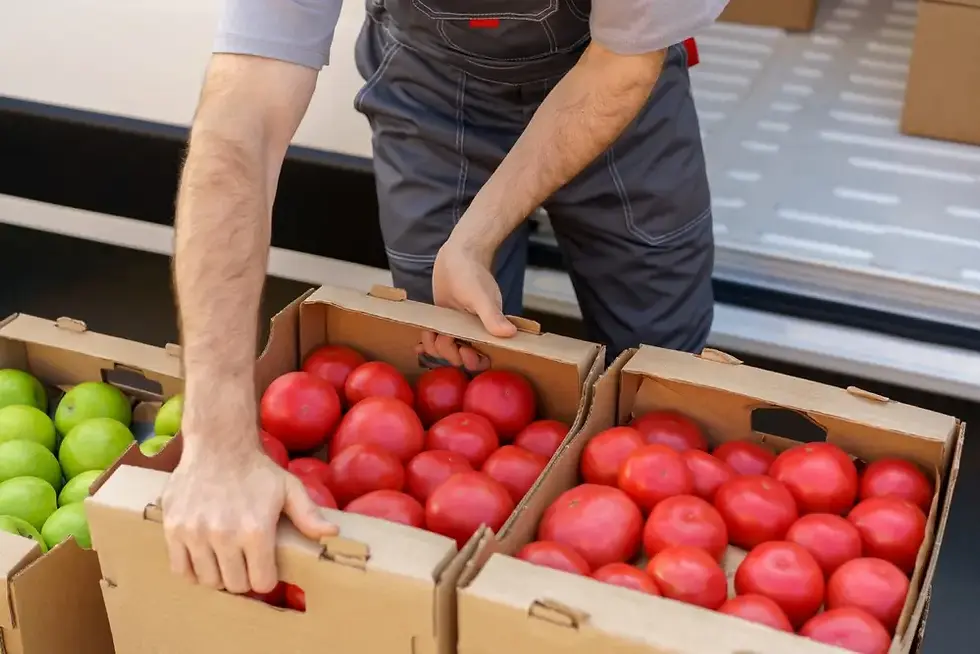
As order volumes increase, logistics complexity grows. A scalable wholesale ERP supports real-time order processing, dispatch planning and automated documentation across multiple daily delivery runs.
For businesses supplying major retailers, hospitality groups or institutional customers, integrated Electronic Data Interchange (EDI) enables orders, pricing, invoices and delivery confirmations to flow directly between systems. For secondary wholesalers, ERP-driven dispatch and logistics workflows ensure orders are picked, packed and delivered accurately, with delivery documentation, stock movements and invoicing generated automatically. This improves fulfilment accuracy, reduces manual handling and supports high-volume distribution to customer distribution centres and local delivery routes.
Feature 4: Structural Scalability and Centralised Data
Wholesalers operating across multiple sites or regions need a system that scales structurally as well as operationally. Multi-DC database capability allows inventory, accounting and reporting to be managed centrally, with role-based access for each location.
Integrated financials ensure sales, rebates, inventory movements and profitability are tracked in real time within the same system. Where processed goods are purchased from third-party facilities, the ERP treats these as standard purchase orders, maintaining continuity of traceability and financial control.
Ongoing platform modernisation, including cloud hosting and API integration, supports future ecosystem connectivity and long-term scalability.

Conclusion
An ERP designed for fresh produce gives wholesalers the control and visibility required to scale in a low-margin, high-volume environment. When inventory, quality assurance, logistics, processing and finance are fully integrated, businesses can reduce errors, protect product value and operate with greater confidence.
As demand for industry-specific ERP solutions continues to rise in Australia, investing in a platform built for fresh produce distribution provides a strong foundation for sustainable growth.
Enhance Your Operations with Fresh Distribution
Fresh Distribution is an ERP platform built specifically for fresh produce wholesalers, supporting compliance, traceability, logistics, repacking and integrated financial management in one system. If you want to reduce operational friction, improve visibility across your business and scale with confidence, visit our Fresh Distribution page to learn how our ERP can support your operations.


